



Men's Trench Coats
Showing 5 products
Explore Our Men's Trench Coats
Men's Trench Coats
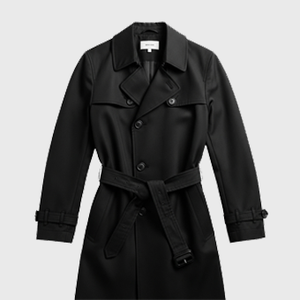
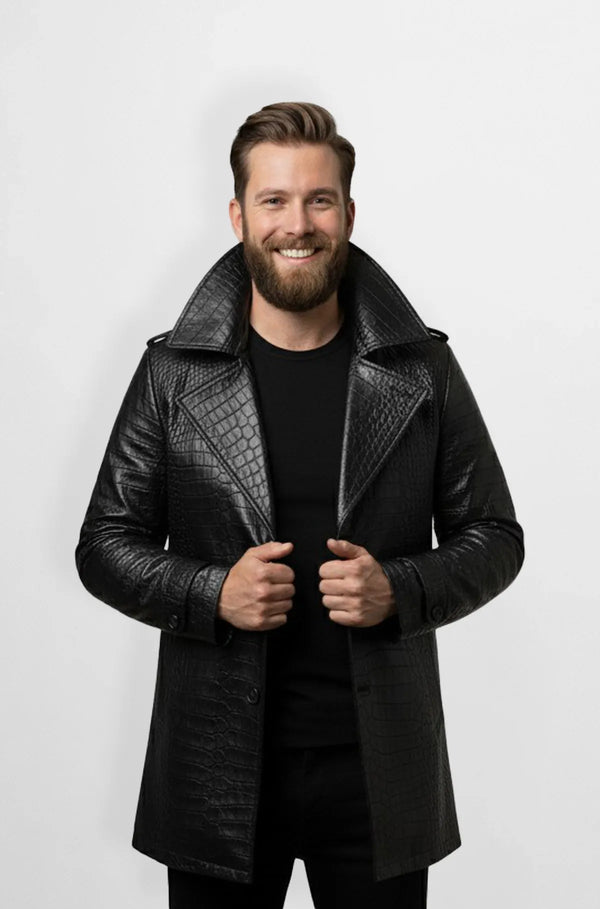
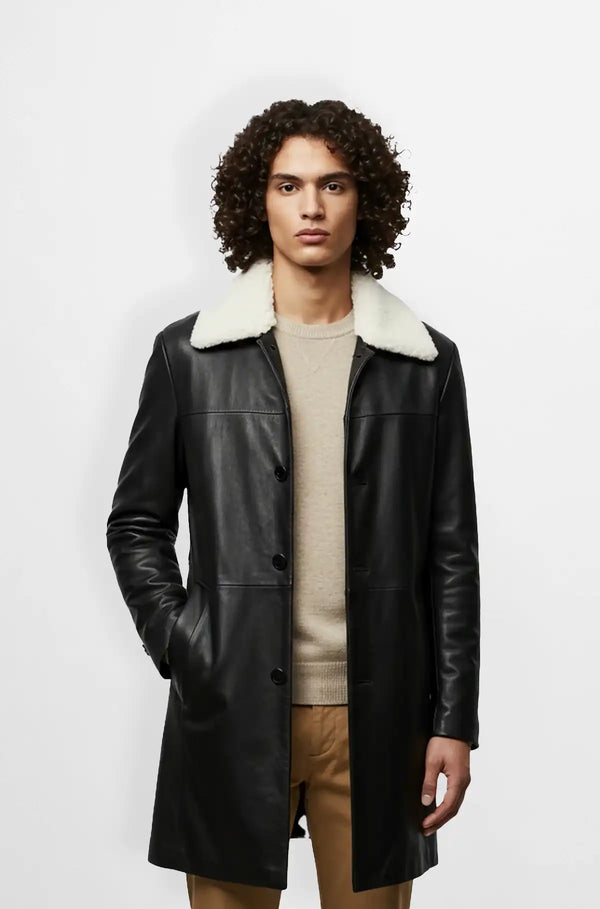
The trench coat gets its name from where it was worn. Originally developed for British Army officers during World War I as a lighter, more practical alternative to the heavy wool greatcoats soldiers had previously worn in the trenches, the design was specified with particular features for combat conditions: raglan sleeves that ended in cuff straps to prevent rain running down the forearm, a belted waist, a storm flap on the chest, and D-rings on the belt originally used to attach map cases and equipment. Fineyst's men's trench coats bring that construction forward in genuine leather, storm flap, epaulettes, deep belted hem, and a classic double-breasted front in black, brown, tan, and dark green.
The Detail Map: What Every Feature on a Trench Coat Does
The trench coat is one of the most functionally designed outerwear garments in existence. Almost every visible detail has a utilitarian origin, and knowing what each one was built for is part of understanding what makes an authentic trench coat different from a long belted coat with superficially similar proportions.
The double-breasted front, typically featuring ten buttons in two rows, creates a double layer of fabric across the chest, providing an extra barrier against wind and rain that a single-breasted front cannot match. The button-close pockets are positioned for large map storage, a practical requirement for field officers who needed to carry and access documents while remaining mobile.
The storm flap on the right chest is an additional panel of fabric that overlays the front closure, directing rain away from the button seam rather than letting it seep through. It originated as both a waterproofing measure and as padding against the recoil of a rifle when aiming from the shoulder. The related term "gun flap" refers to this same detail from its military function.
The epaulettes, the shoulder straps that button close, served as attachment points for rank insignia, gas mask straps, and equipment in their military context. On a modern trench coat, they remain as structural and visual details.
The D-rings on the belt started as utility hooks for attaching map cases, swords, and field equipment. Today they remain as part of the belt hardware.
The raglan sleeves, which run from the collar to the cuff without a standard shoulder seam, allow full arm rotation without the jacket lifting, a detail originally valued for the mobility required in field operations.
Cuff straps that buckle around the wrist were designed to prevent rainwater from running down the forearm when using binoculars in the rain. On a modern trench coat they provide adjustability and a finishing detail.
Leather Trench Coat vs. Gabardine Trench Coat
The original trench coat was made from gabardine, a waterproofed worsted wool fabric that Thomas Burberry developed in 1879 and submitted as a British Army officer's raincoat design to the War Office in 1901. Gabardine's water resistance came from the tight twill weave and lanolin treatment of the wool before weaving, making it the most appropriate fabric available at the time for outerwear that needed to function in rain.
A leather trench coat uses the same silhouette and the same design details — double-breasted front, storm flap, epaulettes, belted waist, D-rings, raglan sleeves, cuff straps — but replaces the gabardine shell with full-grain cowhide. Leather provides wind resistance that fabric cannot match, and it develops patina and character over time in ways gabardine does not. It is a heavier garment than a gabardine trench, and it requires different care, but it offers a durability and presence that places it in a different tier of outerwear.
Fineyst's trench coats are built in full-grain cowhide and wool blend versions, in the same silhouette, so that both materials are available depending on what the buyer is prioritizing.
Length and Proportion
The trench coat's traditional length falls at or just below the knee, a proportion that provides meaningful wind and rain protection across the upper leg while still allowing full stride mobility. This remains the most versatile and widely flattering length across most heights.
Longer cuts extending to mid-calf create a more dramatic, architectural silhouette. They provide more coverage in genuinely cold and wet weather, at the cost of some mobility. Shorter versions ending at the hip or mid-thigh read more like a jacket than a coat and have a more casual, modern feel.
For men of most heights, the knee-length trench coat is the most useful proportional choice for both formal and casual wear.
Caring for a Leather Trench Coat
Leather trench coats benefit from periodic conditioning with a leather-specific product to keep the hide supple and prevent cracking at the fold lines that form at the belt, elbows, and cuffs over time. These are the points of greatest repeated flexion and the areas most likely to show drying first.
If the coat gets wet, blot excess moisture with a dry cloth and allow it to air dry naturally at room temperature. Avoid hanging it near a heat source. Condition the leather once it is fully dry.
For storage, hang on a wide hanger to maintain the shoulder shape. For seasonal storage, a breathable cloth garment bag is appropriate. Clean the metal D-rings and buckles periodically with a dry cloth to prevent oxidation.
Why Choose Our Collection
-
Premium Quality
Crafted with the finest materials for exceptional durability
-
Competitive Pricing
Exceptional value without compromising on quality
-
Fast Shipping
Quick delivery to your doorstep with care
-
Customer Satisfaction
Trusted by customers across 5 countries
Frequently Asked Questions
Why is it called a trench coat?
What are the D-rings on a trench coat for?
What length trench coat should I choose?
What is the gun flap on a trench coat?
Are leather trench coats waterproof?

Quick Shop (Select your Size)

Quick Shop (Select your Size)
Quick Shop (Select your Size)

Quick Shop (Select your Size)

Quick Shop (Select your Size)























Find your best fits
Receive size recommendations by entering your data for each category
Tops
Size recommendations for shirts, coats, jackets, etc